Voice from the Business Frontier
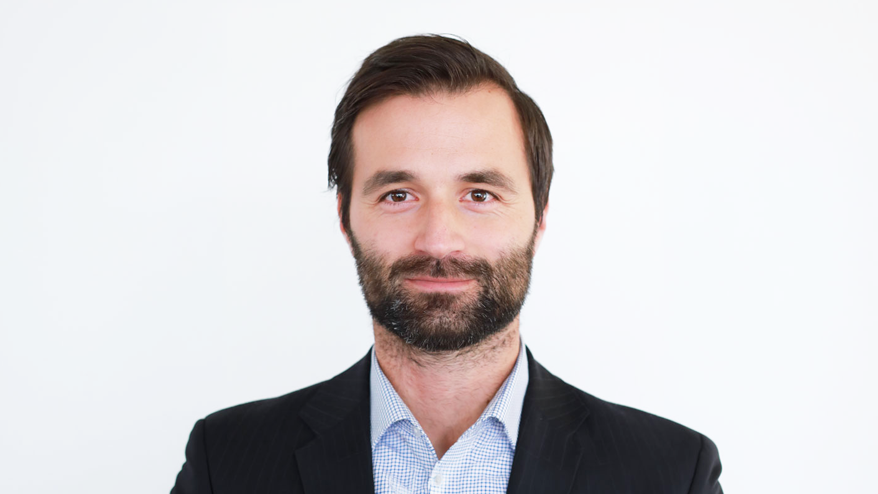
Ondrej Vinzens
Enterprise Risk Manager
Hitachi Energy
Ondrej is based in the Hitachi Energy headquarters in Zurich, Switzerland. He has held similar risk management related roles in other large global organizations before he joined Hitachi Energy in 2020; Ondrej works at the intersection of operations, technology, and strategy, helping Hitachi Energy to respond to uncertainties with a value driven approach.
Key takeaways:
Hitachi Energy is a global technology leader advancing a sustainable, flexible, and secure energy future. Headquartered in Zurich, the company operates globally, with over 50,000 employees and more than 100 years of heritage in power systems and electrification. Its portfolio spans Products, Systems, Software & Automation, and Services, supporting customers across utilities, industry, transport, and infrastructure.
The business is organized into five global Business Units—Grid Automation, Grid Integration, High Voltage Products, Transformers, and Service—covering the full lifecycle of modern power systems. Hitachi Energy leads in critical technologies such as HVDC, grid automation, digital twins, and largescale renewable integration. Supported by 1,800+ field engineers and 2,600+ R&D experts, it maintains one of the world’s largest installed bases of grid assets.
As the energy transition accelerates globally, the company plays a foundational role in enabling electrification, grid modernization, and decarbonization.
As Enterprise Risk Manager, I lead Hitachi Energy’s enterprise risk assessments, a structured, company wide process that enables the organization to assess its most relevant trends and developments carrying a potential to materially impact outcomes of our organizational objectives. Built on the global ERM framework—which establishes governance, risk ownership, and escalation mechanics, this brings together top 200 leaders across Businesses, Regions, and Global Functions, with oversight from the CEO, CFO, Executive Team.
This is not a risk listing reporting exercise; it is an alignment mechanism. Through workshop driven assessments and cross functional dialogue, it synthesizes diverse perspectives into a consolidated enterprise level outlook. This helps us prioritize action themes which need to be activated in context to the material uncertainties, allowing us to anticipate disruption, challenge assumptions, and ensure that leadership is equipped with a forward-looking view of the risks and opportunities that will shape performance and execution.
My role is to design, orchestrate, and continuously improve this process—elevating risk quality, embedding accountability, and enabling leaders to make informed decisions that safeguard value and support sustainable long-term growth.
Like other global organizations, Hitachi Energy operates in an increasingly complex global environment, where uncertainty stems from interconnected geopolitical, regulatory, technological, operational, and people related factors. What is unique to Hitachi Energy is that we are the pioneering technology leader with a No.1 global position in the key business segments in which we operate. In addition, in recent years most of these segments have undergone unprecedented growth, attributing to multiple megatrends maturing at the same time.
Think of energy transition from fossil fuels, energy security requirements, electrification/digitalization of just about anything; the need to redesign the power grids architecture to accommodate two direction flow of energy, and combine it with the emerging technologies such as cloud computing and artificial intelligence – all of which peaked within the same time horizon – and all of which required integration of our technology and solutions. Then, add a need to transition to a new ERP system, include tariff/trade related uncertainty, and you will start getting a picture of the environment in which we have been operating over the last few years.
As far as the external environment is concerned, one of our key sources of uncertainty is geopolitical fragmentation and trade friction. Tariffs, sanctions, export controls, and emerging “geoeconomic competition” reshape supply chains, restrict market access, and introduce significant volatility into procurement cycles. Escalating proxy conflicts and the weaponization of maritime routes further amplify exposure to logistics disruptions, component shortages, and extended lead times. These geopolitical forces directly influence cost, margin stability, execution reliability, and customer delivery commitments.
Technological disruption represents another critical uncertainty. Advances in AI, software defined systems, automation, and data privacy expectations unlock new customer value and operational efficiency but simultaneously introduce cyber exposures, shadow AI risks, and dependencies on rapidly evolving digital ecosystems.
Supply chain fragility remains a structural exposure. Port closures, commodity price volatility, raw material shortages, and regulatory constraints can jeopardize production continuity and increase the likelihood of outages across globally interconnected value chains.
People and skills—particularly the ability to attract, develop, and retain talent—directly influences the organization’s ability to execute growth strategies and maintain operational discipline in rapidly scaling markets.
Despite all these macro trends and increasing attractiveness of our industry, our objective is not only to maintain our No.1 position but to further accelerate. In my opinion, the reason why we’re so successful as the company and why we’re able to navigate through this uncertainty is that we’re driven by risk minded & informed decision making, relentless prioritization, cross-organizational awareness and collaboration and continuous drive towards the organizational objectives.
As far as enterprise risk management is concerned, we have taken inspiration from the business and have replicated the same principles into our Enterprise Risk Management Program. What is key to highlight though is that everyone is considered a risk manager in the context of respective roles and accountabilities. So, in this mature risk set-up, our role is to work with all stakeholder groups across the organization to identify topics which need to be accelerated from the normal course of business-as-usual and to energize the actions.
At Hitachi Energy, my current work focuses on strengthening our enterprise-wide ability to anticipate disruption, respond decisively, and translate uncertainty into tangible value creation. In order to achieve this, we based our enterprise risk assessment approach on the four pillars: 1. Set clear context for the assessment to make it relevant (Hitachi Energy objectives); 2. Work with our internal community to make the output credible; 3. Provide long-horizon analytical insight to trends and promote impact evaluation from the medium-long term perspective so that the business resolution is based on “the early mover opportunistic merit” instead of “closing the gap” fear from the looming threats; 4. Prioritize based on the value potential of the action instead of possible impact of the threat if nothing is done.
Prioritizing based on the value that the action can generate might sound counterintuitive as opposed to a traditional negative impact prioritization of the threat approach; however, for us it’s one of the pillars to drive a focus on the value creation which helps us to put emphasis on the risk topics which have a realistic resolution as opposed to showing the risk register in which most critical risks often lack pragmatic and realistic solutions.
The common misconception is that the ERM manager has some magic wisdom to identify the events that nobody could have thought of, or to create a shortlist of future events which will materialize with precise probability and for which organization needs to be prepared.
Instead, we have developed an approach which puts our people in the center. Our role in the ERM is to facilitate cross-organizational visibility to this knowledge, provide additional insights, and to stimulate collaboration and a proactive approach to propose actions and to drive accountability. To help us achieve this, we are currently developing a risk management platform which is designed with these principles in its core. This includes integrating some generative AI use cases into the design to facilitate insight discovery from the user’s perspective.
For me, the most important point is this: uncertainty on its own does not have much significance. It’s just one item in an endless catalogue of possible signals, trends, disruptions, and hypotheticals. On its own, it has no meaning, no implication, no predictive power. It becomes risk only the moment you interpret it through the lens of your organization’s objectives, constraints, and context. That connection — between external uncertainty and an internal objective and people — is where relevance begins. Without that connection, uncertainty is just noise.
This is why I don’t believe the real challenge is some sophisticated intelligence machine that scans the risk horizon with surgical precision or sophisticated risk models which are able to precisely quantify expected losses. The real challenge is how an organization connects with its own people to make sense of uncertainty in the context of what matters. People across the business hold fragments of insight, operational signals, emerging pain points, and intuitive understanding of feasibility. When you connect systematically and structure their input, uncertainty becomes grounded, contextual, and actionable.
That’s exactly why our approach at Hitachi Energy is intentionally built around capturing internal intelligence rather than obsessing over theoretical risk models. By asking people to express what actions they believe are needed — not what “risks” they fear — we translate uncertainty directly into Action Proposals. Each proposal is rooted in a concrete understanding of objectives, functions, dependencies, and organizational realities. And when we consolidate these into Action Themes and prioritize them, we’re effectively ranking out the value that can be created (or protected) if we act early.
This is where uncertainty becomes strategic. Identified early; it allows you to lean in, shape the playing field, and capture upside. Identified late, you’re left defending, closing gaps, and playing catchup. The difference isn’t the uncertainty itself — it’s how fast and coherently you turn it into action.
However, I’m also realistic: our flow is not perfect. My next challenge is to improve the “close the loop” discipline - ensuring actions don’t just get prioritized but actually executed with clarity, support, and rhythm. Without that, even the best intelligence becomes latent potential instead of realized impact.
So, the essential insight is this: uncertainty only matters when people give it meaning — and organizations give it action. The better you are at connecting with your community, structuring their intelligence, prioritizing what matters, and closing the loop on execution, the more value you create out of the very same uncertainties that hold others back.
We provide you with the latest information on HRI‘s periodicals, such as our journal and economic forecasts, as well as reports, interviews, columns, and other information based on our research activities.
Hitachi Research Institute welcomes questions, consultations, and inquiries related to articles published in the "Hitachi Souken" Journal through our contact form.